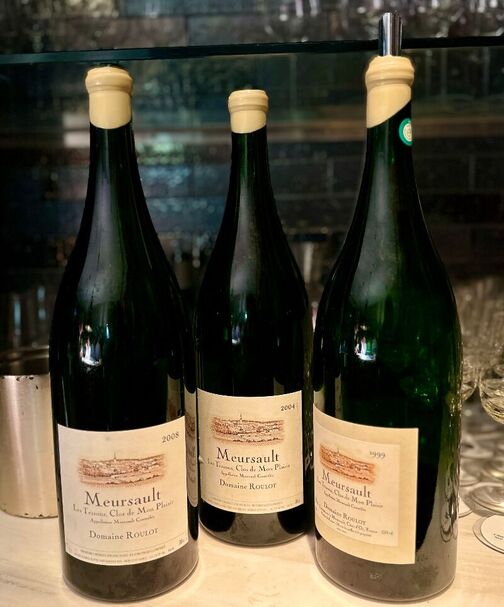
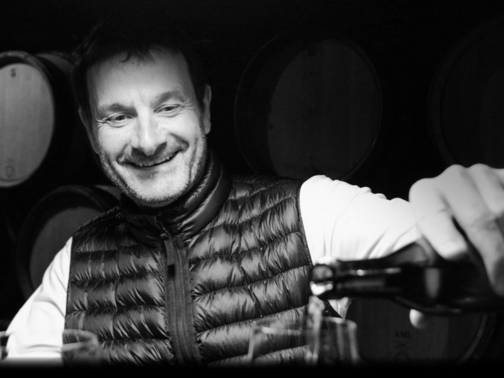
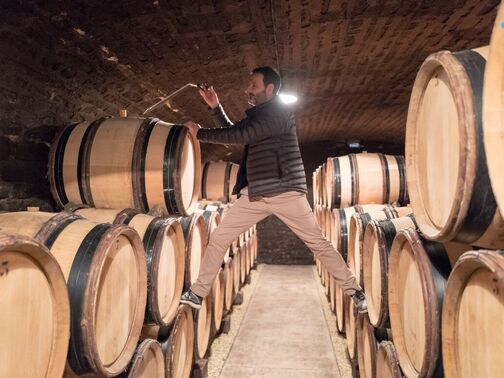
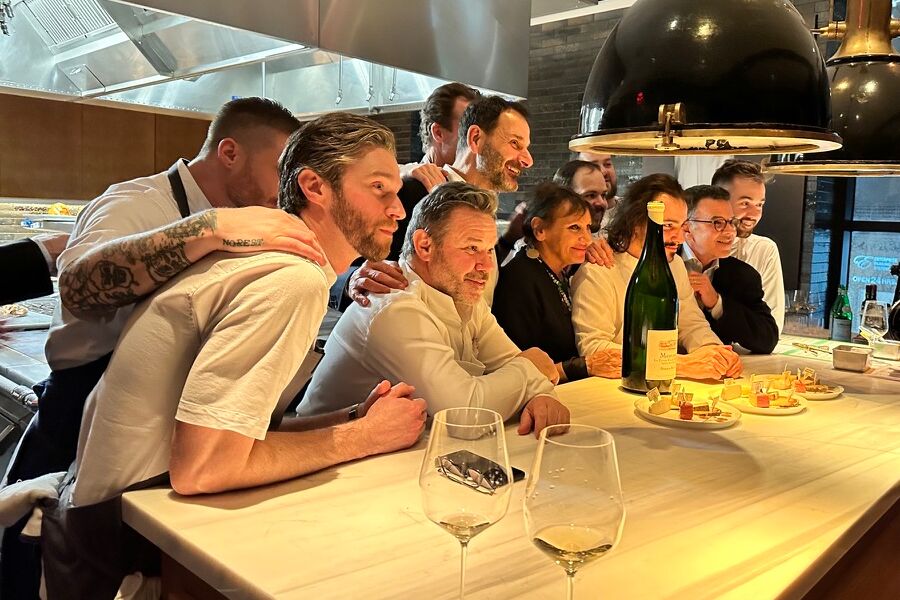
The Roulot Family In 1982, Guy Roulot died suddenly. He'd spent decades building Domaine Roulot into something extraordinary by pioneering single-vineyard bottlings in Meursault when everyone else was blending, marrying into the legendary Coche family and acquiring prime parcels, and making wines that placed second at the Judgment of Paris. His death left the family scrambling. His son, Jean-Marc, was in Paris pursuing an acting career. For seven years, the domaine cycled through winemakers (including two years under Ted Lemon, who would go on to found Littorai in California). In 1989, Jean-Marc made a choice: he walked away from acting and came home to Meursault.
But here's the thing—he didn't really walk away. Jean-Marc still acts. He was recently in Back to Burgundy ('Ce qui nous lie'), a film partially shot at the domaine. In 2015, he hired David Croix as chief winemaker so he could balance both passions while also traveling the world to host intimate dinners for collectors. For the 2023 vintage, his 28-year-old son Félicien (an engineer)
joined the team. The family legacy continues.
Beyond the Golden Triangle
Everyone knows Meursault. It sits in Burgundy's "golden triangle" with Puligny and Chassagne-Montrachet, producing some of the world's most coveted white wines. But just west of Meursault, tucked into the hills where the slope turns from east-facing to north-facing, lie two villages that share the same limestone bedrock: Auxey-Duresses and Monthelie.
Before the AOCs were established in 1937, wines from Auxey-Duresses didn't even have their own appellation they were sold as Meursault and Volnay. That's how close the terroir is. Today, they're described as "miniature Meursaults" with the same mineral backbone, the same citrus and white fruit character, just slightly more austere from the cooler microclimate. One critic calls them "neither Saint-Romain nor Meursault—yet somehow
redolent of both."
These are Burgundy's best-kept value secrets. And when a producer like Roulot works them? The difference between Auxey-Duresses and Meursault becomes an academic splitting of hairs.
The Coche Connection In the 1920s, Léon Coche acquired parcels across Meursault, Auxey-Duresses, and Monthelie. When Guy Roulot married Geneviève Coche (from the legendary Coche family), some of those holdings came to Roulot. Guy pioneered single-vineyard bottlings in Meursault, vinifying each parcel separately to showcase terroir. He did the same with Auxey and Monthelie. Here's the key: Jean-Marc Roulot treats his Auxey-Duresses parcels exactly like his Meursaults. Same gentle pressing, same wild fermentation, same 12 months in barrel followed by 6 months in tank. Same minimal new oak, same barely-there lees stirring. The only difference is where the vines are planted. Jean-Marc's style is what set Roulot apart: bright, chiseled, crystalline. While most Meursault leans rich and buttery, Roulot's wines have a taut spine of acidity and laser-like precision. Critics call him "the hottest ticket in Meursault after Coche-Dury." These wines sell out before they're bottled.
"The Roulot Method" In the 1990s, Jean-Marc developed a winemaking approach that's now imitated across Burgundy, Sonoma Coast, and beyond. It's deceptively simple: ferment in barrel for 12 months with indigenous yeasts, then age in stainless steel tanks for 6 months before bottling. "We get microoxygenation in the wood, then reduction in stainless steel," Jean-Marc explains. "It gives the wine vertical tension."
Most Meursault producers lean on bâtonnage (lees stirring) to build richness and texture. Jean-Marc barely touches it. He stirs a maximum of six times, only in high-acidity vintages, and never after malolactic fermentation. "It creates richness," he told author Clive Coates MW, "but it also creates heaviness, and one loses purity."
The Roulot Method preserves what matters: bright acidity, mineral precision, silky texture. It's why these wines taste like Chablis crashed into Meursault and somehow both won. American Chardonnay producers from California to Oregon have adopted the technique. When expert Sommeliers like Rajat Parr or Larry Stone MS talk about the "Roulot Method," this is what they mean.
The 2023 Vintage 2023 delivered both quality and quantity— a rarity in Burgundy! The summer was cooler than recent years (2020, 2022), preserving acidity and giving the wines that classic "Burgundian" transparency. Some growers are comparing the reds to 2010 and 2016. For whites: expressive aromatics, fresh acidity, pure fruit. Wines that don't need to shout but will get ALL of the attention.
These are minuscule quantities and they're highly allocated. If you want in, let us know ASAP by reserving your bottles today. These allocations are available for pick-up or shipping on/after Tuesday 12/23/25 at DECANT NAPA. Pre-Christmas pickup is only available from the Napa shop, but items can be transferred to San Francisco after 12/27/25 for pick up. Please indicate this in your order notes and selecting "pick up in-store".
|